
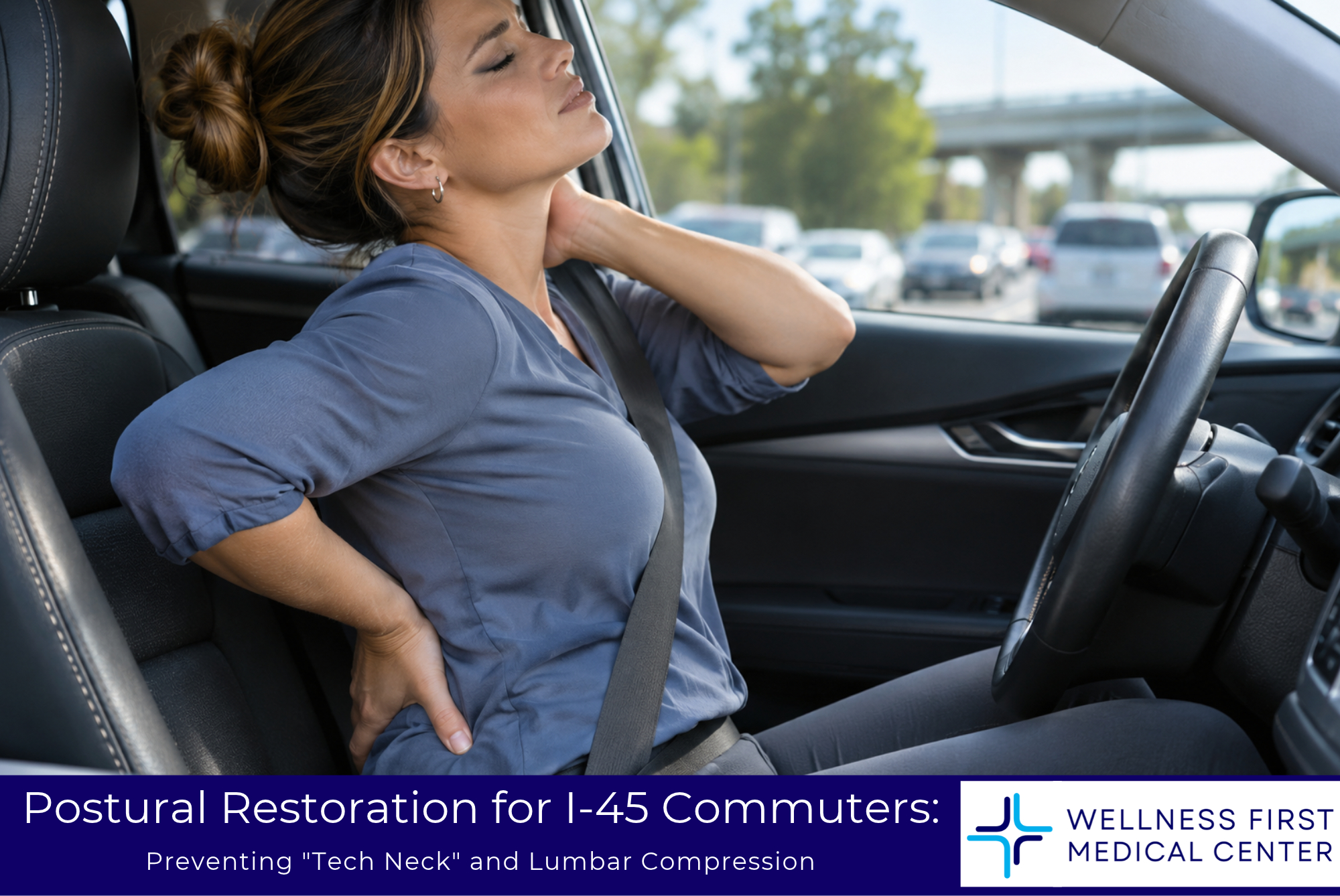
How Daily Commuting and Technology Use Affect Spinal Health
For many residents of Dickinson, League City, Texas City, and surrounding Galveston County communities, extended periods of sitting are part of everyday life. Commuting along Interstate 45, working at a computer, and using smartphones can place sustained demands on the neck, shoulders, and lower back.
Over time, prolonged static positioning can contribute to muscle fatigue, stiffness, and discomfort, particularly when opportunities for movement are limited.
The term “tech neck” commonly describes neck and upper-back symptoms associated with prolonged device use. Although it is not a formal medical diagnosis, it highlights the relationship between sustained positioning, muscular endurance, and physical activity.
At Wellness First Chiropractic in Dickinson, TX, chiropractic care and physical rehabilitation can help patients address musculoskeletal discomfort associated with prolonged sitting and repetitive daily activities.
Why Long Commutes Can Contribute to Neck and Back Pain
Driving requires sustained attention and relatively limited movement.
During extended commutes, the cervical and lumbar muscles help stabilize the head and torso while the body remains seated.
Prolonged Static Muscle Activity
Muscles can become uncomfortable when required to maintain similar positions for extended periods.
Limited movement opportunities can contribute to stiffness and reduced tolerance for sitting.
Forward Head Positioning
Looking downward at a smartphone or maintaining a forward head position while using a computer can increase the demands placed on cervical muscles.
However, there is no single ideal posture that prevents all neck pain. Movement variability and individual comfort are important.
Lumbar Loading During Sitting
Sitting changes the mechanical demands placed on the lumbar spine and surrounding tissues.
Although sitting does not automatically damage spinal discs, prolonged sitting can aggravate existing mechanical lower back symptoms in susceptible individuals.
What Is Postural Restoration?
Postural restoration broadly refers to strategies designed to improve movement awareness, muscular coordination, and tolerance for everyday positions.
The goal is not to force the body into one rigid posture.
Instead, effective rehabilitation helps patients develop strength, mobility, and the ability to move comfortably between positions.
Cervical Mobility
Controlled neck movements can help reduce stiffness associated with prolonged desk work and driving.
Scapular Strengthening
Strengthening the muscles surrounding the shoulder blades can improve endurance during computer-based activities.
Thoracic Mobility
Upper-back mobility exercises can support comfortable reaching, turning, and upright movement.
Core and Hip Strength
Progressive strengthening of the trunk and hip muscles can improve tolerance for sitting, standing, and lifting.
Practical Ergonomic Strategies for I-45 Commuters
Adjust Your Vehicle Seat
Position the seat so that the steering wheel and pedals can be reached comfortably without excessive stretching.
The head restraint should be appropriately positioned to provide protection during a collision.
Support Comfortable Lumbar Positioning
Some drivers benefit from lumbar support that helps maintain a comfortable seated position.
Take Movement Breaks
During longer journeys, safe opportunities to stop, walk, and change position can reduce sustained muscular loading.
Avoid Looking Down at Devices
Phones and navigation systems should be positioned to minimize unnecessary neck strain without obstructing the driver’s view.
Never adjust or use handheld devices while driving.
Reducing Tech Neck at Work and Home
Position Computer Monitors Appropriately
A monitor positioned near eye level can reduce the need for sustained neck flexion.
Keep Frequently Used Items Within Reach
Reducing repetitive reaching can improve comfort during prolonged desk work.
Change Positions Regularly
Alternating between sitting, standing, and walking helps reduce continuous loading of the same tissues.
Build Physical Capacity
Regular exercise improves muscular endurance and overall physical function.
The Occupational Safety and Health Administration (OSHA) provides guidance on computer workstation ergonomics.
How Chiropractic Care and Physical Rehabilitation Can Help
Musculoskeletal Evaluation
A clinician can assess cervical and lumbar movement, muscular strength, neurological symptoms, and functional limitations.
Manual Therapy
Selected patients benefit from manual therapy for mechanical neck or lower back pain.
Therapeutic Exercise
Exercise-based rehabilitation can improve strength, movement tolerance, and functional endurance.
Personalized Ergonomic Recommendations
Recommendations should reflect the patient’s work environment, commute duration, symptoms, and daily activities.
Wellness First Chiropractic provides chiropractic care and physical rehabilitation services for patients seeking individualized musculoskeletal treatment.
When Should Neck or Back Pain Be Evaluated?
Persistent pain, worsening mobility, or symptoms that interfere with work and sleep deserve professional assessment.
Pain accompanied by progressive weakness, numbness, or other neurological changes requires additional medical evaluation.
Frequently Asked Questions About Tech Neck and Commuter Back Pain
Can driving every day cause chronic lower back pain?
Prolonged driving can contribute to or aggravate mechanical lower back discomfort, particularly when combined with limited physical activity or existing musculoskeletal problems.
What is tech neck?
Tech neck is an informal term describing neck and upper-back discomfort associated with prolonged use of smartphones, tablets, and computers.
Can chiropractic adjustments improve posture?
Manual therapy can improve movement and symptoms in selected patients, but lasting functional improvement often requires exercise and activity changes.
Is sitting bad for spinal discs?
Sitting is not inherently harmful. However, prolonged sitting can aggravate symptoms in some individuals, particularly when movement opportunities are limited.
What exercises help commuter-related back pain?
Walking, trunk strengthening, hip exercises, and mobility work can help improve physical tolerance. Exercise selection should reflect individual symptoms.
How often should I take breaks from sitting?
There is no universally required interval, but regularly changing position and incorporating movement throughout the day is beneficial.
Can an ergonomic workstation eliminate neck pain?
Ergonomic adjustments can improve comfort, but persistent neck pain may involve multiple contributing factors requiring additional treatment.
Improve Neck and Back Comfort in Dickinson, TX
Daily commuting and technology use do not have to dictate your physical comfort.
An individualized approach that combines movement education, strengthening, and appropriate musculoskeletal treatment can help patients manage discomfort and improve everyday function.
Wellness First Chiropractic serves patients throughout Dickinson, League City, Texas City, and surrounding communities seeking chiropractic and physical medicine care.
Contact Information
Wellness First Chiropractic
350 FM 517 Rd W
Dickinson, TX 77539
Phone: (281) 337-3337
Website: wellnessfirstmedicalcenter.co
Appointments: Request an Appointment
Office Hours: Monday, Tuesday, Thursday, Friday: 8:00 AM–12:00 PM and 2:00 PM–6:00 PM. Closed Wednesday and weekends.