
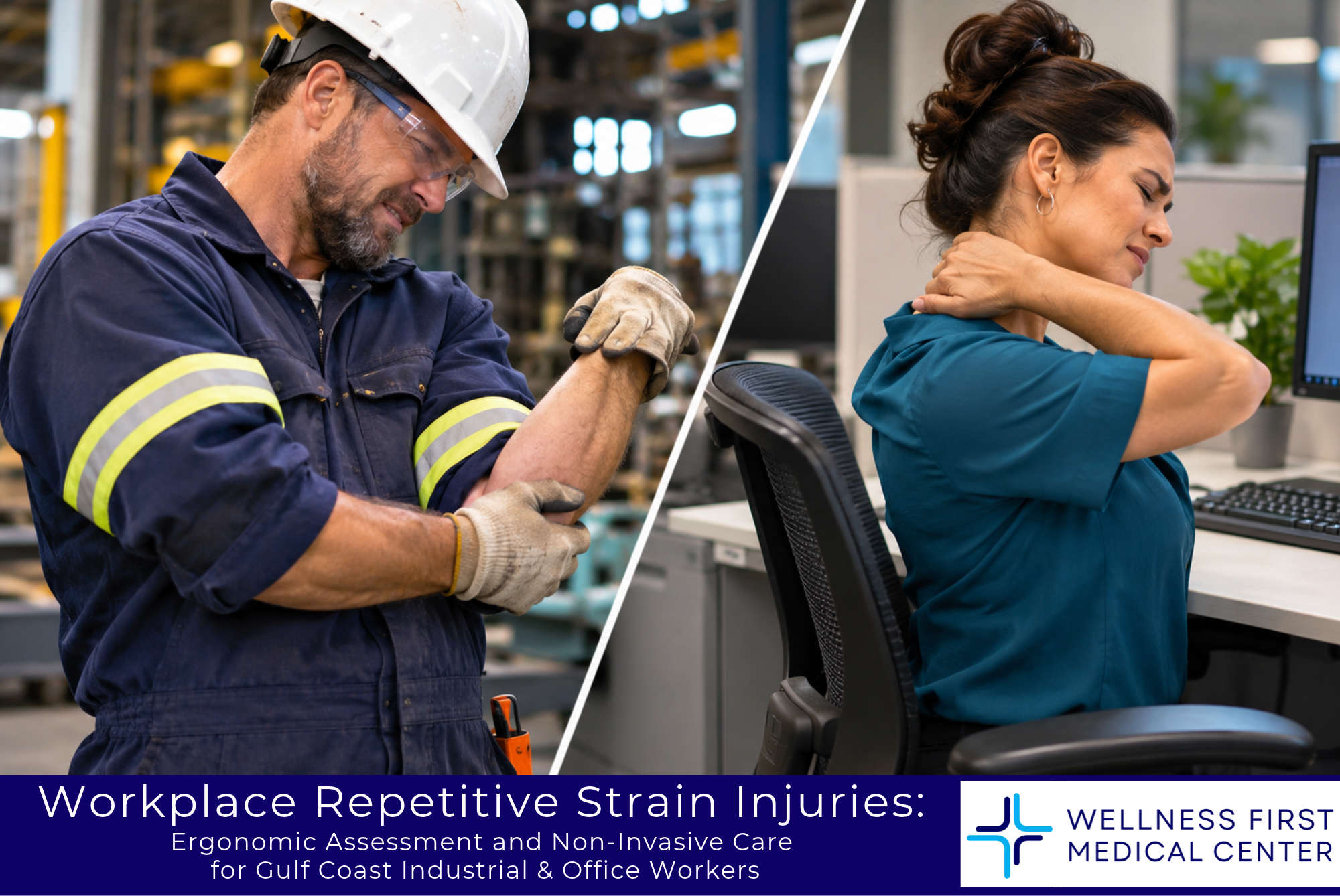
Understanding Repetitive Strain Injuries in the Workplace
Repetitive strain injuries can affect employees across a wide range of industries, from office environments to manufacturing facilities, construction sites, warehouses, and industrial operations.
For workers throughout Dickinson, League City, Texas City, and the greater Galveston County region, repetitive movements, forceful lifting, prolonged standing, and sustained computer use can contribute to musculoskeletal discomfort.
These conditions can affect the neck, shoulders, elbows, wrists, hands, and lower back, interfering with productivity and everyday activities.
At Wellness First Chiropractic in Dickinson, TX, musculoskeletal evaluation and physical rehabilitation can help patients identify functional limitations and explore appropriate non-invasive treatment options.
What Are Repetitive Strain Injuries?
Repetitive strain injury (RSI) is a broad term used to describe musculoskeletal conditions associated with repeated physical demands or sustained loading.
It is not a single medical diagnosis.
Specific conditions can involve tendons, muscles, joints, peripheral nerves, or other structures.
Common Repetitive Strain Conditions
Work-related musculoskeletal problems include:
- Carpal tunnel syndrome
- Lateral epicondylalgia, commonly called tennis elbow
- Rotator cuff tendinopathy
- De Quervain tenosynovitis
- Mechanical neck pain
- Lower back strain
- Tendon irritation involving the hands and wrists
- Certain nerve compression disorders
Accurate diagnosis is essential because conditions with similar symptoms can require different treatments.
How Workplace Activities Contribute to Musculoskeletal Pain
Repetitive Movements
Repeated gripping, typing, assembly tasks, and tool use can place sustained demands on muscles and tendons.
Forceful Exertion
Heavy lifting, pushing, pulling, and forceful gripping increase mechanical loading.
Awkward or Sustained Positions
Working overhead, bending repeatedly, or maintaining a fixed position for extended periods can contribute to discomfort.
Limited Recovery Time
Insufficient recovery between demanding tasks can affect the ability of tissues to tolerate repeated loading.
Vibration Exposure
Prolonged use of vibrating tools can contribute to certain upper-extremity and neurological disorders.
The National Institute for Occupational Safety and Health (NIOSH) provides information about workplace ergonomics and musculoskeletal injury prevention.
Repetitive Strain Injuries Among Gulf Coast Industrial Workers
Industrial employees may perform physically demanding tasks involving lifting, tool operation, equipment maintenance, and repetitive handling of materials.
Shoulder and Rotator Cuff Problems
Repeated overhead activity can contribute to shoulder pain and reduced tendon loading tolerance.
Lower Back Strain
Repeated bending, lifting, and twisting can aggravate mechanical lower back symptoms.
Elbow and Wrist Tendinopathy
Forceful gripping and repeated wrist movements can contribute to tendon-related pain.
Hand and Nerve Symptoms
Numbness, tingling, or weakness can indicate peripheral nerve involvement and should not automatically be attributed to muscle strain.
Repetitive Strain Injuries Among Office Workers
Office employees face different physical demands, but prolonged computer use can still contribute to discomfort.
Neck and Shoulder Tension
Extended screen time can increase sustained muscular activity in the cervical and shoulder regions.
Wrist and Hand Symptoms
Repeated keyboard and mouse use can aggravate certain upper-extremity conditions.
However, computer use alone does not establish a diagnosis of carpal tunnel syndrome.
Prolonged Sitting and Lower Back Pain
Extended sitting can aggravate lower back discomfort in susceptible individuals, especially when movement opportunities are limited.
The Importance of Ergonomic Assessment
Ergonomics involves designing work tasks, tools, and environments to better match human capabilities.
A useful ergonomic assessment considers the demands of the job rather than focusing exclusively on posture.
Workstation Height
Adjusting work surfaces can reduce unnecessary reaching and awkward positioning.
Tool Selection
Appropriately designed tools can reduce excessive gripping force and improve task efficiency.
Lifting and Material Handling
Mechanical assistance, improved task design, and appropriate lifting strategies can reduce excessive physical demands.
Work-Rest Scheduling
Alternating demanding tasks and incorporating recovery periods can help manage repetitive loading.
Movement Variety
Changing positions and movement patterns throughout the workday reduces prolonged loading of the same tissues.
The OSHA Ergonomics Program provides workplace resources for recognizing and reducing musculoskeletal hazards.
Non-Invasive Treatment Options for Repetitive Strain Injuries
Comprehensive Musculoskeletal Evaluation
An assessment should identify the affected tissues, symptom patterns, occupational demands, and functional limitations.
Neurological screening may be necessary when patients report numbness, tingling, or weakness.
Therapeutic Exercise
Progressive strengthening improves the capacity of muscles and tendons to tolerate repeated activity.
Exercises should be selected according to the diagnosed condition and the physical demands of the patient’s job.
Manual Therapy
Manual treatment can provide short-term symptom relief and address selected mobility limitations.
Activity Modification
Temporary adjustments to task intensity, repetition, or duration can help manage symptoms while rehabilitation progresses.
Functional Rehabilitation
Rehabilitation should prepare patients for meaningful activities, including lifting, reaching, gripping, standing, and other job-specific tasks.
Wellness First Chiropractic offers physical rehabilitation treatment and physical medicine for patients with musculoskeletal limitations.
Why Early Recognition Matters
Ignoring persistent pain can allow functional limitations to become more difficult to manage.
Early assessment can help distinguish uncomplicated muscle discomfort from tendon disorders, nerve compression, or other conditions requiring specific treatment.
Warning Signs That Require Medical Evaluation
Patients should seek assessment for persistent numbness, progressive weakness, worsening pain, substantial swelling, or difficulty performing normal tasks.
Sudden neurological symptoms or severe traumatic injuries require urgent medical attention.
Frequently Asked Questions About Workplace Repetitive Strain Injuries
What is the most common cause of repetitive strain injuries?
Repetitive movements, forceful exertion, awkward positioning, and insufficient recovery can contribute to musculoskeletal disorders. The relative importance of each factor depends on the specific condition.
Can repetitive strain injuries heal without surgery?
Many conditions improve with appropriate activity modification, rehabilitation, ergonomic changes, and other conservative treatments.
Can chiropractic care help work-related neck and back pain?
Selected patients benefit from manual therapy, exercise, and individualized musculoskeletal care.
How can industrial workers reduce repetitive strain injuries?
Reducing excessive force, improving tool design, using mechanical assistance, and allowing adequate recovery can help manage workplace musculoskeletal risks.
Are office workers at risk for repetitive strain injuries?
Yes. Sustained computer work and repetitive upper-extremity activities can contribute to certain musculoskeletal symptoms.
Can repetitive strain injuries cause numbness?
Some conditions involve nerve compression and can produce numbness or tingling. Persistent neurological symptoms require assessment.
Should I stop working if I develop repetitive strain symptoms?
Not necessarily. Appropriate work modifications and rehabilitation can allow many individuals to remain active. Decisions depend on the diagnosis, symptom severity, and occupational demands.
How long does recovery take?
Recovery varies according to the affected tissues, duration of symptoms, physical demands, and treatment response.
Can ergonomic changes prevent all workplace injuries?
No. Ergonomic improvements can reduce certain risks but cannot eliminate every cause of musculoskeletal injury.
When should I schedule an evaluation?
Persistent pain, recurring symptoms, reduced strength, or difficulty performing work tasks warrants professional assessment.
Support Workplace Mobility and Musculoskeletal Health in Dickinson, TX
Whether your work involves industrial equipment, repetitive lifting, computer use, or extended periods of standing, maintaining musculoskeletal health is essential for comfort and daily function.
Wellness First Chiropractic provides chiropractic and physical medicine services for patients seeking evaluation and non-invasive care for musculoskeletal discomfort.
Residents of Dickinson, League City, Texas City, Santa Fe, and nearby Gulf Coast communities can contact the practice to discuss their symptoms and rehabilitation goals.
Contact Information
Wellness First Chiropractic
350 FM 517 Rd W
Dickinson, TX 77539
Phone: (281) 337-3337
Website: wellnessfirstmedicalcenter.co
Appointments: Request an Appointment
Office Hours: Monday, Tuesday, Thursday, Friday: 8:00 AM–12:00 PM and 2:00 PM–6:00 PM. Closed Wednesday and weekends.